
When Someone Offered to Pay Off His Loan, Peter Declined
After an HFL loan helped Peter invest in his future, he chose to leave an unexpected gift for someone who might need it more.
When Peter learned that an anonymous donor wanted to pay off the balance of his Hebrew Free Loan, he declined. “I thought maybe there were people that didn’t have comfortable jobs or were in more need than I was at that moment in time,” he said.
By then, Peter had finished graduate school and found a better-paying job. The $7,500 interest-free loan he had received from HFL had helped him get there, and he was comfortable continuing his $200 monthly payments. “I felt like it was a fair amount to pay and a way for me to give back,” he said. And rather than accept the donor’s offer to eliminate his remaining payments, Peter asked HFL to leave the funds for someone else.
Peter’s decision fit into a much longer story—one that began well before he ever needed a loan himself.
Growing up with tzedakah
 Peter grew up in Pittsburgh in a family where helping others was an active part of family life. “I think tzedakah was always important throughout my whole life,” he noted. “My parents have been pretty forward about it.”
His family helped and continues to sponsor refugees through their Jewish community. After Peter’s father passed away from ALS when Peter was a child, the family became involved in advocacy and fundraising around the disease, including lobbying in Harrisburg and Washington, D.C.
Peter’s mother was also involved with Hebrew Free Loan in Pittsburgh; therefore, when he found himself needing financial help for graduate school in Philadelphia, he already knew about the interest-free lending model.
After earning his undergraduate degree at Temple University, Peter began working for a nonprofit. He wanted to advance professionally but felt underemployed. “I wanted to move up,” he said. “And when you’re a little underemployed, you’re not making as much as you might need.”
Graduate school offered a path forward, but paying for it on his existing income was difficult. Peter applied to HFL and received a $7,500 interest-free education loan.
The degree changed the kinds of opportunities available to him. “It made it so that the jobs that I was applying to were more fast-track positions,” Peter shared. “I ended up on a career ladder [where I knew I would be] getting promotions.”
Peter noted that before graduate school, career advancement felt much less certain: “You’re kind of hoping and praying that things will get better, but you don’t see it in sight.”
Ultimately, Peter went to work for the federal government and moved with his wife to the Philadelphia suburbs, closer to her family.
From borrower to giver
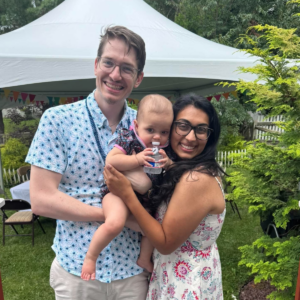
By the time the anonymous donor offered to pay off Peter’s remaining HFL balance, the circumstances that had originally brought him to HFL had
changed. Peter had completed the degree and his career had progressed. Thus, the monthly loan payment was something Peter felt he could comfortably manage.
Continuing to repay HFL also offered Peter a simple way to contribute. “I felt like it was a fair amount to pay and a way for me to give back,” he said, adding that continuing the payments removed “all that friction” of deciding where, how much, and for how long to give.
Peter doesn’t know who ultimately benefited from the money he declined, but it likely went toward another borrower’s education loan, as most of the loans paid off during that round were education-related. Despite no longer needing additional financial support, Peter recognized that someone else might.